



There are SUVs that look capable, and then there are SUVs that are engineered to be capable. The difference becomes obvious the moment the pavement ends.
The Ford Bronco belongs firmly in the second category. From its chassis architecture to its modular bodywork, the Bronco wasn’t styled to suggest toughness—it was constructed around it. In a market crowded with crossovers that borrow rugged cues for visual effect, the Bronco stands apart as a purpose-built machine designed from the ground up for real off-road performance.
Yet what makes it compelling isn’t just its trail-ready credentials. It’s the way it blends durability, adaptability, and everyday usability into a cohesive identity. The Bronco doesn’t feel like a compromise. It feels intentional.
Built on Fundamentals, Not Fashion
At the core of the Bronco’s character is its body-on-frame construction.
In an era where unibody crossovers dominate showroom floors, Ford made a deliberate decision to return to traditional SUV architecture. Body-on-frame construction offers inherent strength and torsional durability—critical advantages when navigating uneven terrain, climbing over rocks, or absorbing repeated off-road impacts.
This is not engineering nostalgia. It’s functional design.
A separate frame allows the suspension to articulate more effectively under stress. It also improves long-term durability in demanding environments. For buyers who plan to venture beyond maintained roads—or who simply value mechanical robustness—the Bronco’s foundation signals seriousness.
This architecture aligns it more closely with traditional off-roaders than suburban crossovers. It’s a structural commitment to capability, not just an aesthetic gesture.
Design That Communicates Intent
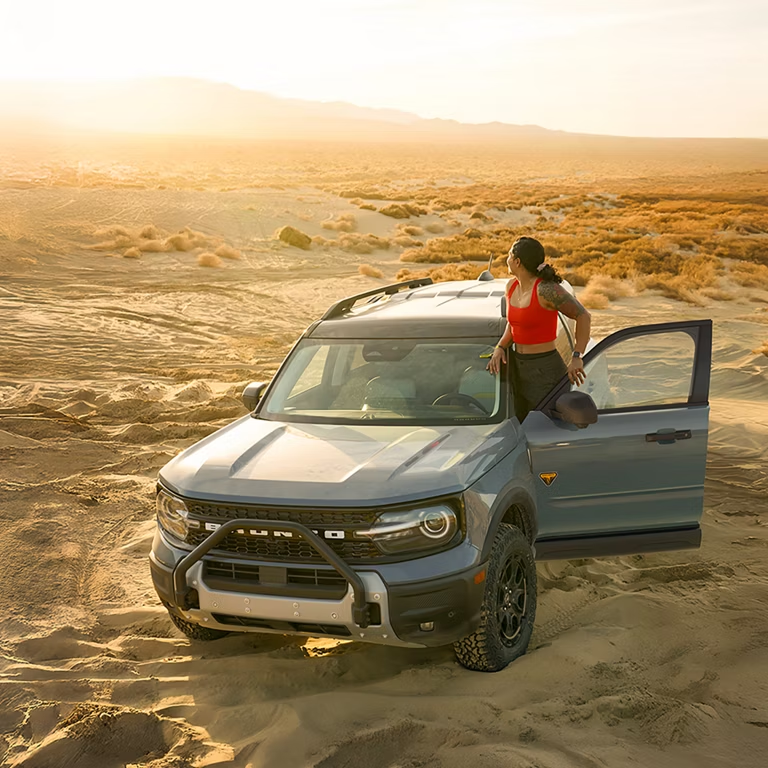
Even before the engine starts, the Bronco makes its priorities clear.
Its upright proportions aren’t retro indulgence. They serve visibility. A tall greenhouse and flat hood improve sightlines, particularly important when cresting hills or navigating tight trails. Short front and rear overhangs enhance approach and departure angles—critical metrics for clearing obstacles without scraping bumpers.
The stance is purposeful. The wheel arches are pronounced and squared off, framing aggressive tire options. The grille is vertical and assertive, reinforcing the vehicle’s width and trail-ready posture.
Most telling are the visible recovery points. They’re not hidden behind trim or disguised as decorative elements. They are integrated into the design and meant to be used. It’s an honest expression of intent.
In a segment where many SUVs imply adventure while remaining tethered to asphalt, the Bronco presents capability without apology.

Modularity With Meaning
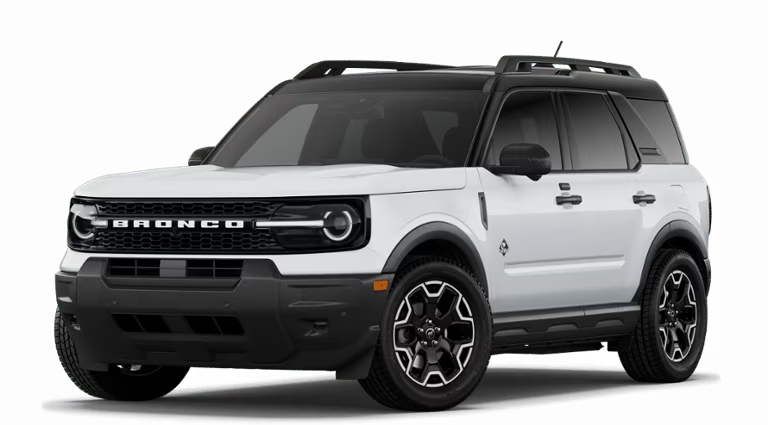
Removable doors and roof panels might appear to be lifestyle features at first glance, but in the Bronco, they’re extensions of its design philosophy.
The modularity isn’t superficial. It’s engineered.
Doors can be removed and stored onboard in certain configurations. Roof panels detach in sections, allowing varying degrees of open-air exposure. The mirrors are mounted to the body rather than the doors, so they remain functional when the doors come off. Even the fender flares and bumpers are designed with modular replacement in mind.
This flexibility matters off-road. It improves visibility in technical terrain. It enhances the connection between driver and environment. And it reinforces the Bronco’s identity as a tool built for exploration.
At the same time, that same modularity appeals to owners who may never tackle a rock crawl but want a vehicle that feels immersive and engaging. The Bronco can be practical on Monday and adventurous by Saturday afternoon without changing vehicles—or personalities.
Adaptability as a Defining Trait
The most overlooked strength of the Bronco isn’t its suspension articulation or its water-fording capability. It’s its versatility.
Modern SUVs are expected to perform multiple roles. They commute, they haul, they road-trip, and occasionally, they explore. Many vehicles lean heavily into one identity and compromise the others.
The Bronco manages the balance more effectively than most.
As a daily driver, it offers contemporary infotainment systems, driver assistance technologies, and a cabin that blends durability with comfort. Materials are chosen for resilience, but not at the expense of usability. Controls are large and intuitive. Surfaces are designed to withstand mud and dust without feeling industrial.
Then, when the environment changes, so does the vehicle’s demeanor. Its off-road hardware and terrain management systems transform it into a serious trail machine. It doesn’t need aftermarket reinforcement to feel authentic. The capability is baked in.
This ability to move seamlessly between urban routine and remote terrain is what truly defines the Bronco. It is not a weekend toy forced into daily duty. Nor is it a commuter dressed in outdoor attire. It inhabits both worlds convincingly.
Confidence Before the First Mile
Perhaps the Bronco’s most compelling attribute is psychological.
There’s a confidence that comes from driving a vehicle that was engineered with purpose. You feel it in the seating position, in the visibility, in the solidity of the chassis. Even on paved roads, the Bronco communicates durability.
That matters to buyers.
Capability isn’t just about what a vehicle can do at its limit. It’s about how it makes the driver feel in everyday scenarios. The Bronco’s upright stance, squared-off edges, and visible hardware all contribute to a sense of readiness. It feels prepared, whether the journey involves gravel roads or city traffic.
And in a market where SUVs often blur into one another, that clarity of mission stands out.
A Modern Interpretation of a Classic Formula
Reviving an iconic nameplate carries risk. Lean too heavily on nostalgia and the product feels dated. Chase modern trends too aggressively and it loses authenticity.
The Bronco threads that needle carefully.
It embraces its heritage through design cues and off-road emphasis, yet it integrates contemporary technology and refinement. It acknowledges the expectations of modern buyers without abandoning the mechanical fundamentals that define serious SUVs.
The result is a vehicle that feels grounded. It doesn’t chase every trend. It commits to its identity.
The Bottom Line
The Ford Bronco isn’t rugged by appearance alone. It is engineered for durability, modularity, and adaptability from its core structure outward.
Its body-on-frame construction reinforces strength. Its proportions enhance capability. Its removable components expand its functionality. And its ability to transition between daily driving and extreme terrain gives it a versatility few competitors truly match.
For enthusiasts and informed buyers, that authenticity matters.
The Bronco doesn’t ask to be admired from a distance. It expects to be used.
And that expectation is precisely what makes it compelling.


