



For decades, the idea of a truly adventurous Ford SUV has been tied to one name: Bronco. Boxy, capable, and unapologetically rugged, it defined what American off-road utility could be. But as buyer needs evolved—families grew, road trips got longer, and expectations for comfort increased—Ford’s adventure DNA didn’t disappear. It simply grew larger. Today, the Ford Expedition stands as the modern interpretation of that legacy, blending full-size luxury and serious off-road credibility in a way few vehicles in its class can match.
The question isn’t whether the Expedition can replace the Bronco in spirit. It’s whether it has quietly become something even more versatile.
From Bronco Roots to Expedition Reality
When the original Bronco exited the market in the mid-1990s, Ford faced a shift in consumer priorities. Buyers still wanted toughness and trail capability, but they also demanded space, safety, and long-distance comfort. The Expedition emerged as a response—built on a truck-based platform, offering real four-wheel-drive systems, and designed to carry people and gear deep into the outdoors.
Over the years, the Expedition leaned heavily into its family-hauler role. Yet beneath the refinement, the bones of a serious SUV remained intact. Body-on-frame construction, available low-range four-wheel drive, and generous towing capability kept it aligned with Ford’s off-road heritage, even as the segment grew increasingly suburban.
Now, with rugged-focused trims entering the lineup, that original adventurous intent feels more deliberate than ever.

Rugged Trims, Real Capability
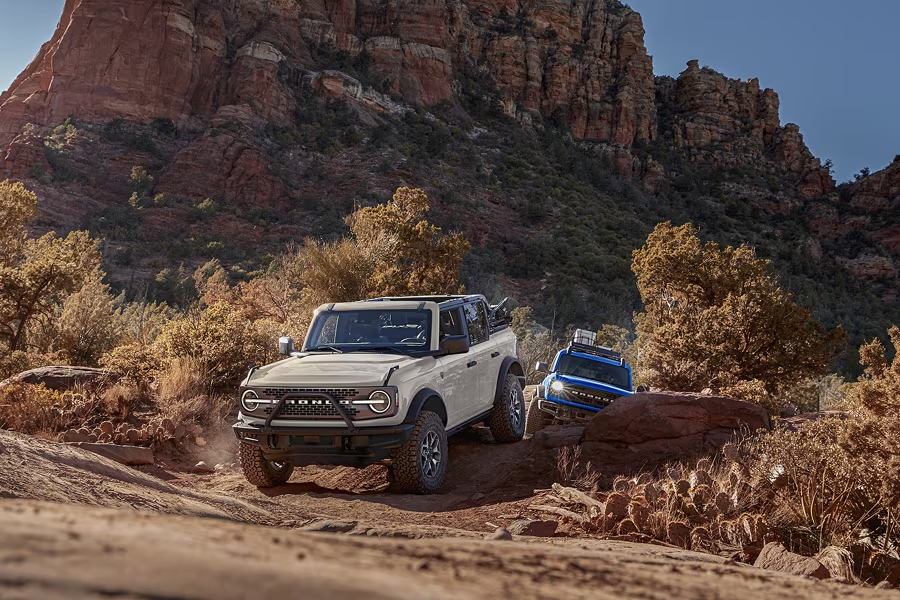
Recent Expedition variants like the Tremor and Timberline aren’t cosmetic packages meant to look tough in a parking lot. They represent a renewed commitment to real-world off-road performance. Lifted suspension setups improve approach and departure angles, while underbody protection shields vital components from trail damage.
Large all-terrain tires provide the grip and sidewall strength necessary for loose dirt, mud, and rocky terrain. These aren’t marginal upgrades. They fundamentally change how the Expedition behaves when pavement ends.
One of the most telling additions is Trail Turn Assist, a feature borrowed directly from Ford’s off-road development playbook. By braking the inside rear wheel, the system tightens the turning radius dramatically, making tight switchbacks and narrow forest trails far more manageable. In a vehicle of this size, that technology is more than a novelty—it’s the difference between confidence and hesitation off-road.
Power That Matches the Size
A full-size SUV needs more than traction to feel capable. It needs power delivered in a way that inspires trust. The high-output EcoBoost V6 under the Expedition’s hood does exactly that. With strong horsepower and, more importantly, abundant torque available low in the rev range, the Expedition moves with authority despite its substantial mass.
On the highway, that translates into effortless passing and relaxed cruising, even when fully loaded with passengers and cargo. Off-road, it means controlled climbs, steady progress through sand or dirt, and the ability to maintain momentum without strain.
Unlike older naturally aspirated V8s, the turbocharged V6 balances performance with efficiency, allowing the Expedition to serve as both a long-distance road-trip vehicle and a trail-ready adventure platform.
Best-in-Class Ground Clearance, Modern Control
Ground clearance is often overlooked in large SUVs, but it plays a critical role when terrain gets unpredictable. The Expedition’s best-in-class clearance gives it the ability to crest obstacles that would stop lesser crossovers cold.
More importantly, modern drive modes and traction management systems make that clearance usable. Drivers can tailor throttle response, transmission behavior, and stability control settings to match conditions, whether navigating snow-covered roads or crawling over uneven terrain.
This level of electronic sophistication doesn’t dilute the driving experience. It enhances it, allowing drivers to focus on line choice and surroundings rather than fighting the vehicle.
Comfort Without Compromise
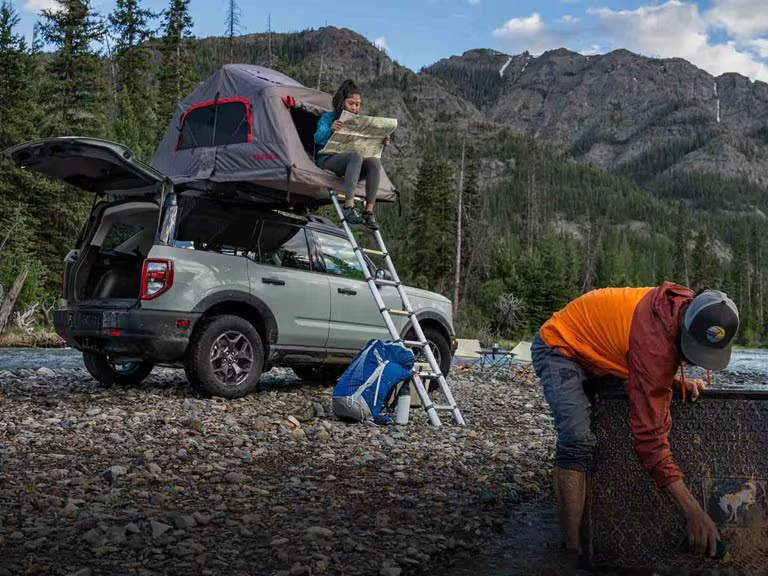
What truly separates the Expedition from traditional off-road SUVs is its ability to switch personalities effortlessly. After a day on the trail, the cabin offers quiet insulation, supportive seating, and space for three rows of passengers without apology.
The interior is designed for long hours behind the wheel, with intuitive controls and materials that feel appropriate for both daily commuting and extended travel. Cargo capacity remains a defining strength, making it easy to pack camping gear, bikes, or overlanding equipment without playing Tetris.
This balance is the Expedition’s greatest achievement. It doesn’t ask buyers to choose between adventure and comfort. It delivers both, without forcing compromises that define smaller, more specialized off-road vehicles.
A Modern Interpretation of Ford’s Adventure DNA
The Ford Expedition doesn’t replace the Bronco. It evolves the idea behind it. Where the Bronco represents focused, trail-first enthusiasm, the Expedition expands that ethos to include families, long journeys, and real-world versatility.
It proves that size doesn’t have to mean softness, and comfort doesn’t have to come at the expense of capability. In a market crowded with SUVs that promise adventure but rarely deliver it, the Expedition stands out by quietly doing the work.
For buyers who want one vehicle that can handle school runs, cross-country drives, towing duties, and genuine off-road exploration, the Expedition makes a compelling case as the modern heir to Ford’s rugged SUV legacy.


