



The electric three-row SUV segment is rapidly becoming one of the most important battlegrounds in the automotive industry. Families who once defaulted to gasoline-powered crossovers or minivans are now demanding electric alternatives that deliver not only range and practicality, but also emotional appeal and distinctive character. Within the Hyundai Motor Group, two closely related yet philosophically different vehicles have emerged as standout contenders: the Kia EV9 and the Hyundai Ioniq 9.
Despite sharing technological DNA, these two large electric SUVs approach the family mobility question from entirely different perspectives. Their divergence is not simply aesthetic—it reflects how modern automakers are tailoring electric vehicles to different buyer personalities. The result is a fascinating case study in how design philosophy can shape the driving and ownership experience.
Kia EV9: Bold, Functional, and Adventure-Ready
The Kia EV9 enters the segment with a clear and confident identity. Its design language is unapologetically upright, with squared-off proportions that echo traditional SUVs while projecting a distinctly futuristic presence. The vehicle’s stance is commanding, emphasizing utility and durability—qualities that resonate strongly with buyers who still associate family SUVs with capability and versatility.
From an engineering standpoint, the EV9 leverages Hyundai Motor Group’s dedicated E-GMP electric platform, allowing for flat-floor packaging and generous interior dimensions. The result is a cabin that feels remarkably open, with flexible seating arrangements that accommodate both large families and cargo-heavy weekend adventures. Second-row lounge seating options and configurable third-row access highlight the model’s focus on passenger usability rather than mere specification bragging rights.
Behind the wheel, the EV9 prioritizes composure over aggressive performance theatrics. Power delivery is smooth and predictable, offering the kind of effortless acceleration that suits highway cruising and suburban commuting alike. Even in dual-motor configurations, the vehicle maintains a calm, controlled demeanor that aligns with its long-distance touring capability.
Kia’s interior design approach further reinforces this philosophy. Materials balance durability with modern sophistication, and the digital interface integrates seamlessly into a wide panoramic display layout. The environment feels approachable and family-oriented, rather than overly experimental. In essence, the EV9 positions itself as a bridge between traditional SUV expectations and next-generation electric mobility.

Hyundai Ioniq 9: Aerodynamic Elegance Meets Tech-Centric Minimalism
If the EV9 represents confident structural presence, the Hyundai Ioniq 9 pursues an entirely different emotional direction. Its design language emphasizes fluidity, efficiency, and futuristic refinement. Smooth body contours and aerodynamic surfacing are central to the vehicle’s identity, reflecting Hyundai’s broader Ioniq sub-brand strategy that blends technology and efficiency-driven aesthetics.
The Ioniq 9’s cabin pushes further into minimalist territory. Where the EV9 celebrates versatility and adaptability, the Hyundai counterpart seeks to create a lounge-like sanctuary. Clean surfaces, ambient lighting, and carefully curated digital interfaces establish an environment designed to reduce sensory clutter. The overall effect is closer to a modern living space than a traditional vehicle interior.
Driving dynamics are expected to follow the same philosophy. Rather than emphasizing rugged versatility, the Ioniq 9 prioritizes refinement and isolation. Suspension tuning and acoustic engineering are focused on delivering a serene ride experience, reinforcing the idea that electric SUVs can function as quiet, stress-free travel environments. For buyers who view commuting as a time for relaxation rather than engagement, this approach holds strong appeal.
The Ioniq 9 also underscores Hyundai’s commitment to maximizing efficiency through aerodynamic optimization. Subtle exterior design choices contribute to improved energy consumption and extended driving range—an increasingly important consideration as electric vehicles transition from early-adopter novelty to mainstream family transportation.
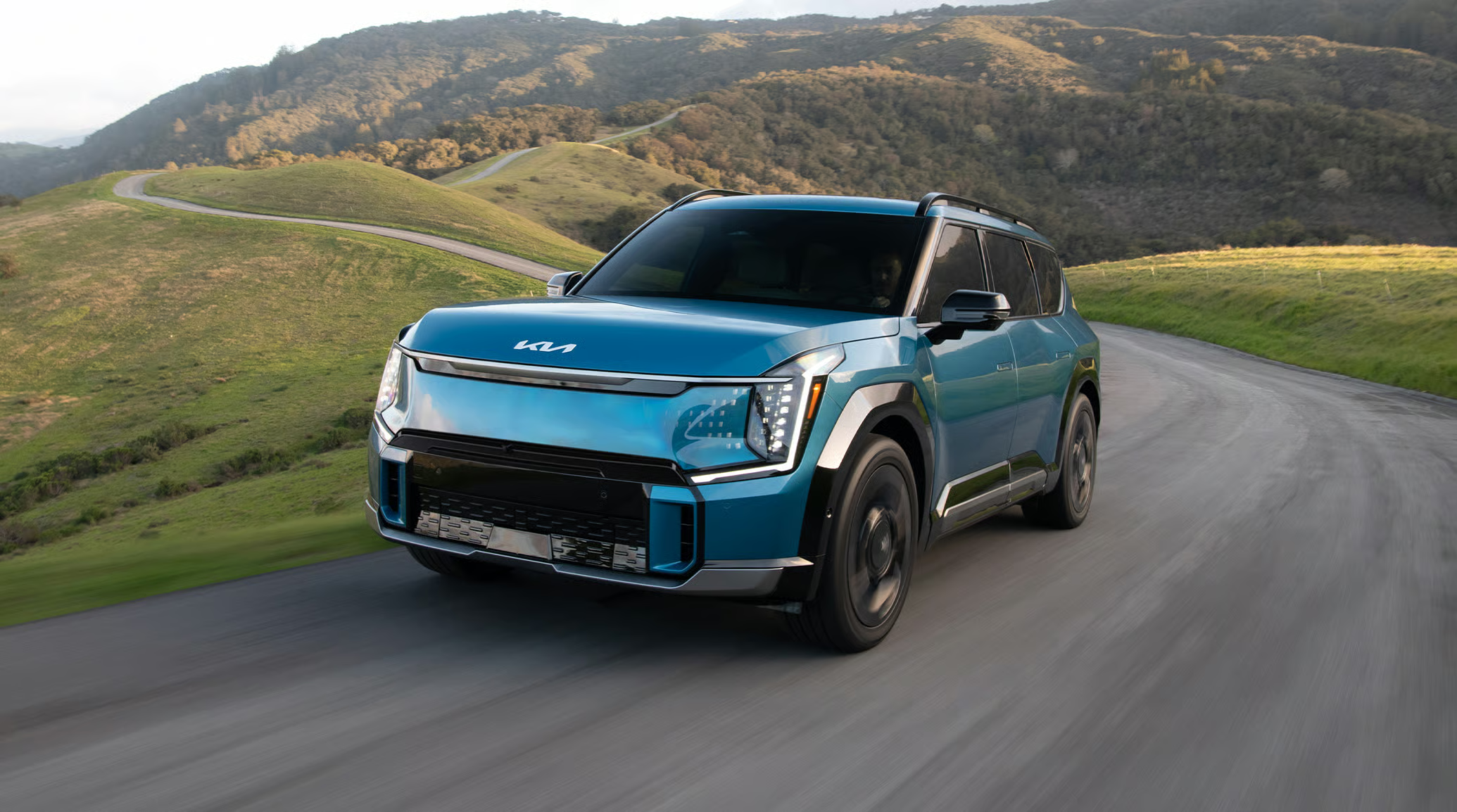
Shared Technology, Divergent Interpretations
Underneath their contrasting visual identities, both SUVs benefit from advanced shared technology. The E-GMP architecture supports ultra-fast charging capability, high-voltage battery systems, and scalable motor configurations. These foundational elements enable competitive range figures and allow both vehicles to deliver strong performance relative to their size and weight.
However, the differentiation lies in how each brand chooses to express these capabilities. Kia integrates the technology into a narrative centered on practicality and lifestyle versatility. Hyundai frames the same hardware within a story of modern design, digital sophistication, and aerodynamic innovation.
This strategic contrast reflects Hyundai Motor Group’s broader brand segmentation. Rather than allowing internal competition to dilute product identity, the company uses shared engineering to create distinct customer experiences. It is a strategy increasingly common among global automakers seeking to maximize development efficiency while preserving brand individuality.
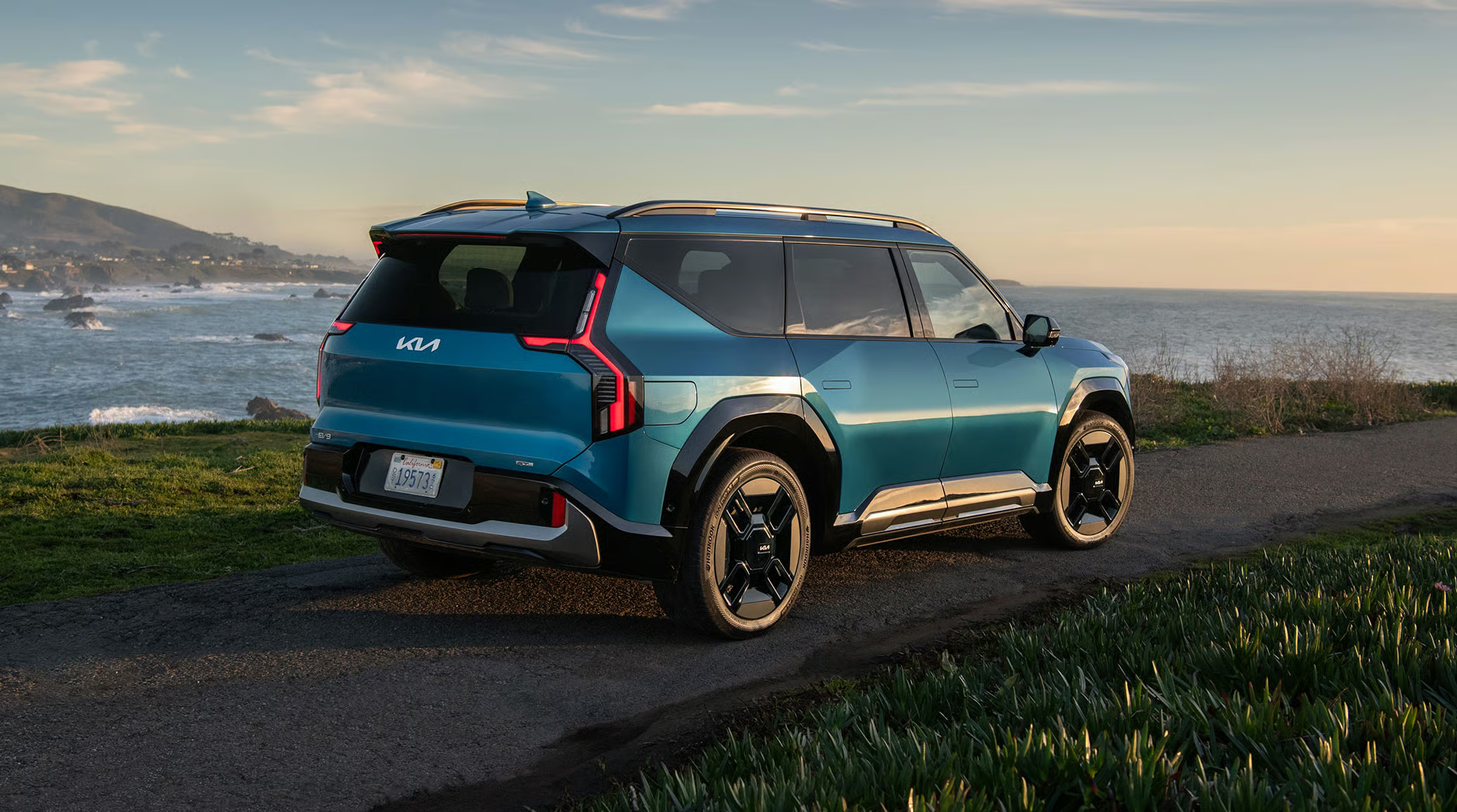
Lifestyle Alignment: Choosing Personality Over Specification
For potential buyers, the decision between the EV9 and Ioniq 9 is unlikely to hinge solely on performance metrics or range figures. Both vehicles are expected to deliver strong results in those areas. Instead, the choice often becomes a reflection of personal lifestyle priorities.
The EV9 appeals to families who value presence, flexibility, and a sense of adventure. Its design encourages active use, whether that involves road trips, outdoor recreation, or multi-passenger transport. It maintains a visual and emotional connection to traditional SUV ruggedness while embracing electric modernization.
The Ioniq 9, by contrast, targets buyers drawn to design sophistication and interior tranquility. It represents an interpretation of family mobility that emphasizes calm, refined travel. Its minimalist approach and aerodynamic efficiency align with consumers who view electric vehicles as an extension of contemporary design culture.

The Bigger Picture: Electric SUVs Redefining Family Mobility
The emergence of both the Kia EV9 and Hyundai Ioniq 9 signals how rapidly electric vehicles are evolving beyond early-stage experimentation. Large, three-row electric SUVs once seemed impractical due to battery limitations and packaging challenges. Today, they represent some of the most advanced expressions of electric vehicle engineering.
More importantly, these models demonstrate that electric family vehicles no longer require compromise. Buyers can now choose between multiple design philosophies while retaining essential attributes such as range, interior space, and charging convenience. The competition is no longer about whether electric SUVs can meet family needs—it is about how those needs are interpreted and delivered.
As the market continues to mature, vehicles like the EV9 and Ioniq 9 illustrate a future where electric mobility is defined not just by sustainability goals, but by emotional design, comfort innovation, and personalized lifestyle integration.


