



Could one of the most distinctive compact crossovers of the last decade really be reaching the end of the road? The quiet winding down of the Kia Soul is not just about a single nameplate leaving showrooms. It reflects a broader industry shift—one that increasingly prioritizes scale, electrification, and aerodynamic sameness over character-driven design.
For years, the Kia Soul stood defiantly apart from the automotive mainstream. In a segment dominated by gently sloped roofs and conservative proportions, the Soul’s upright, box-forward silhouette felt almost rebellious. It didn’t pretend to be sporty or rugged. Instead, it leaned into honesty: maximize space, improve visibility, and make everyday driving easier. That clarity of purpose is exactly what made the Soul beloved by such a wide range of drivers, from first-time buyers to aging urban commuters.
Why the Kia Soul Mattered in a Sea of Similarity
The Soul arrived at a time when compact crossovers were becoming the default choice for buyers stepping away from sedans. Most manufacturers played it safe, producing vehicles that blended into one another with minimal visual risk. Kia did the opposite. The Soul’s proportions were unapologetically upright, its greenhouse expansive, and its stance square.
That design wasn’t just stylistic bravado. The tall roof and wide-opening doors translated directly into usable interior space. Rear passengers enjoyed headroom that embarrassed more expensive competitors, while the cargo area remained practical despite the Soul’s compact footprint. Visibility was excellent, a rarity in modern vehicles increasingly burdened by thick pillars and aggressive beltlines.
Kia doubled down on personality with bold paint options and interior trim that leaned playful rather than premium. It was a reminder that not every car needed to chase luxury aspirations to feel well thought out. The Soul felt approachable, friendly, and refreshingly human.

Market Forces the Soul Couldn’t Escape
Despite its loyal following, the Soul ultimately became a casualty of shifting market realities. Consumer preferences have drifted steadily toward larger vehicles, even within the compact crossover segment. Buyers increasingly equate size with safety, status, and long-term value, regardless of actual need.
At the same time, automakers are under immense pressure to streamline platforms and prioritize electrification. Engineering resources are being funneled toward vehicles that can support hybrid and electric powertrains at scale. Boxy, upright shapes—while space-efficient—are aerodynamically inefficient, making them less ideal candidates for maximizing electric range.
From a business standpoint, the decision to phase out the Soul is logical. From an enthusiast’s perspective, it feels like a quiet loss of diversity in an already homogenized market.
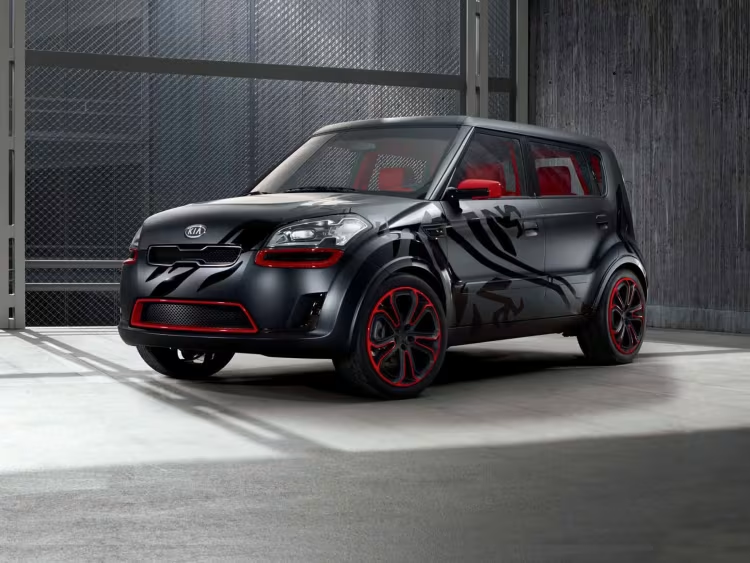
The Soul’s Lasting Influence on Crossover Design
Even as it exits the lineup, the Soul’s influence is impossible to ignore. It helped normalize the idea that compact crossovers didn’t need to look like shrunken SUVs to succeed. Its success gave manufacturers permission to experiment, at least briefly, with proportions that prioritized usability over visual aggression.
More importantly, the Soul proved that character sells—sometimes not in blockbuster numbers, but in lasting brand goodwill. Kia’s reputation for daring design, which later manifested in far more ambitious products, can be traced back to the confidence gained from vehicles like the Soul.
For many owners, the Soul wasn’t just transportation. It was an extension of personality, a car that felt intentionally different without being impractical or eccentric for the sake of it.
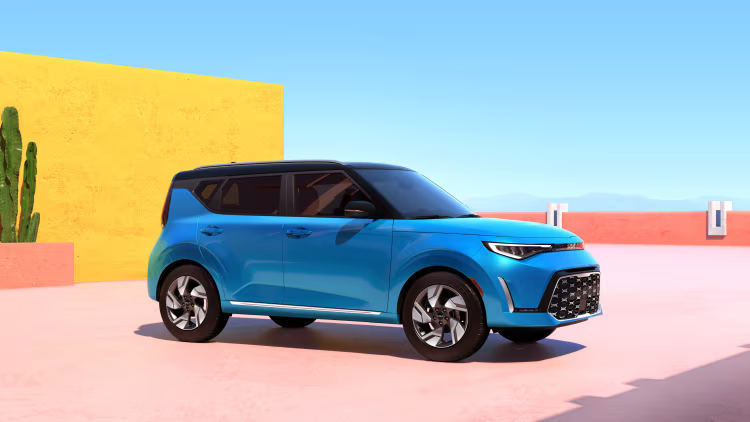
What the Soul’s Exit Says About the Industry’s Future
The disappearance of the Kia Soul underscores a sobering reality: modern automotive design is becoming increasingly risk-averse. As regulations tighten and development costs soar, individuality often becomes collateral damage.
Electric vehicles, in particular, favor sleek shapes optimized for efficiency. While that makes technical sense, it also threatens to erase the visual diversity that once made car spotting interesting. The Soul stood as proof that practicality and charm could coexist, even in a budget-friendly package.
Its absence leaves a noticeable gap for buyers who valued simplicity, visibility, and honest design over aggressive styling cues and inflated dimensions.
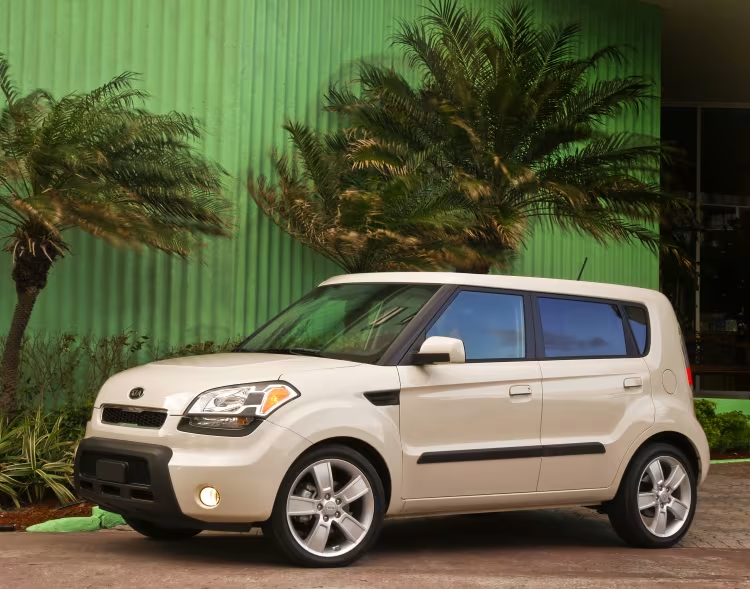
A Legacy That Outlives Production
The Kia Soul may be leaving showrooms, but its spirit endures in the conversations it sparked and the expectations it reshaped. It reminded both buyers and manufacturers that practicality doesn’t have to be dull, and that cars can still have a sense of humor without sacrificing function.
As the industry charges toward an electrified, SUV-dominated future, the Soul stands as a reminder of what gets lost when personality gives way to pure optimization. Not every driver wants more power, more screens, or more size. Some just want a vehicle that feels thoughtfully designed for real life.
In that sense, the Kia Soul didn’t fail the market. The market simply moved on—and in doing so, left behind one of its most genuinely likable creations.


